Start with one little spark
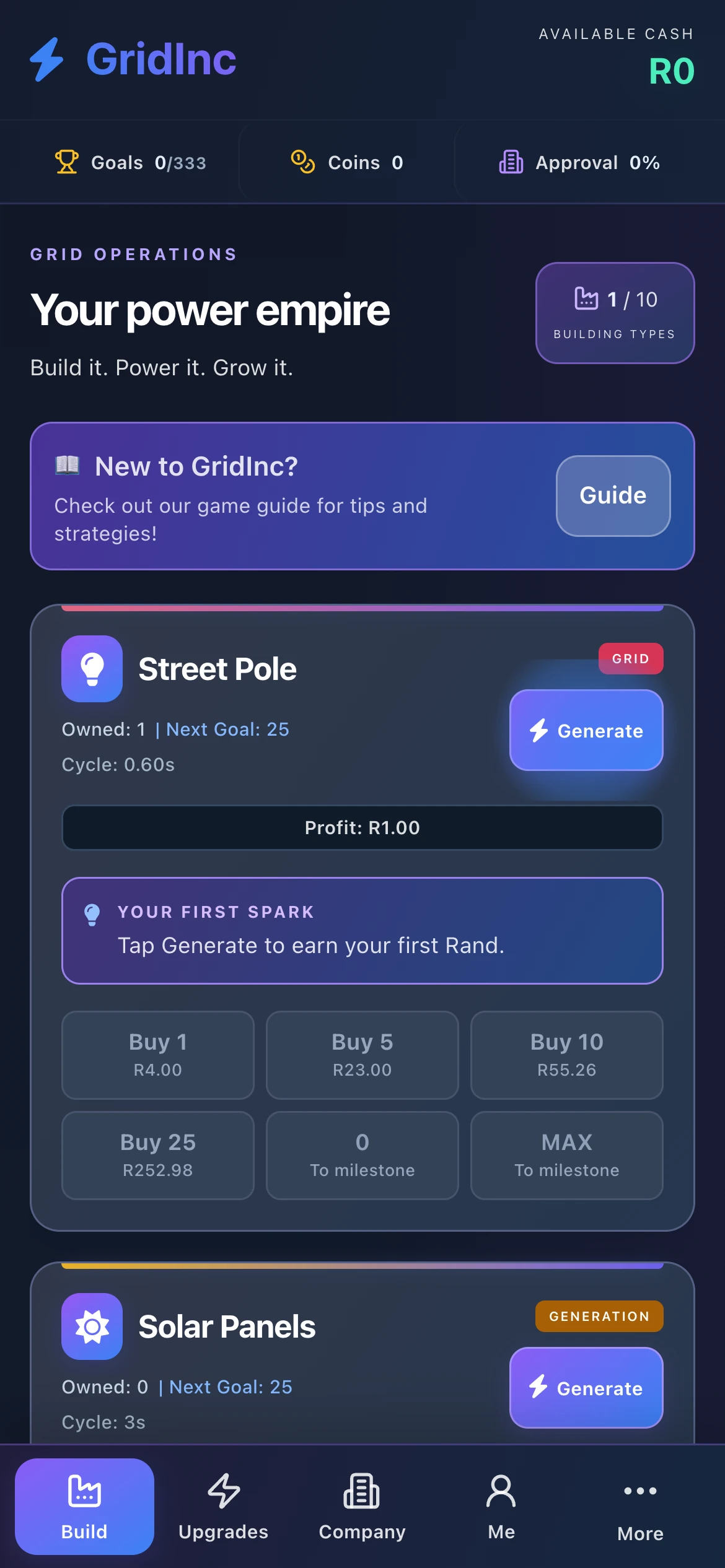
The fantasy had to begin small. A giant power empire is satisfying only when the player remembers the first street pole. That became the emotional shape of GridInc: build one useful thing, earn a little, make a decision, then watch a system grow beyond the size you first imagined.
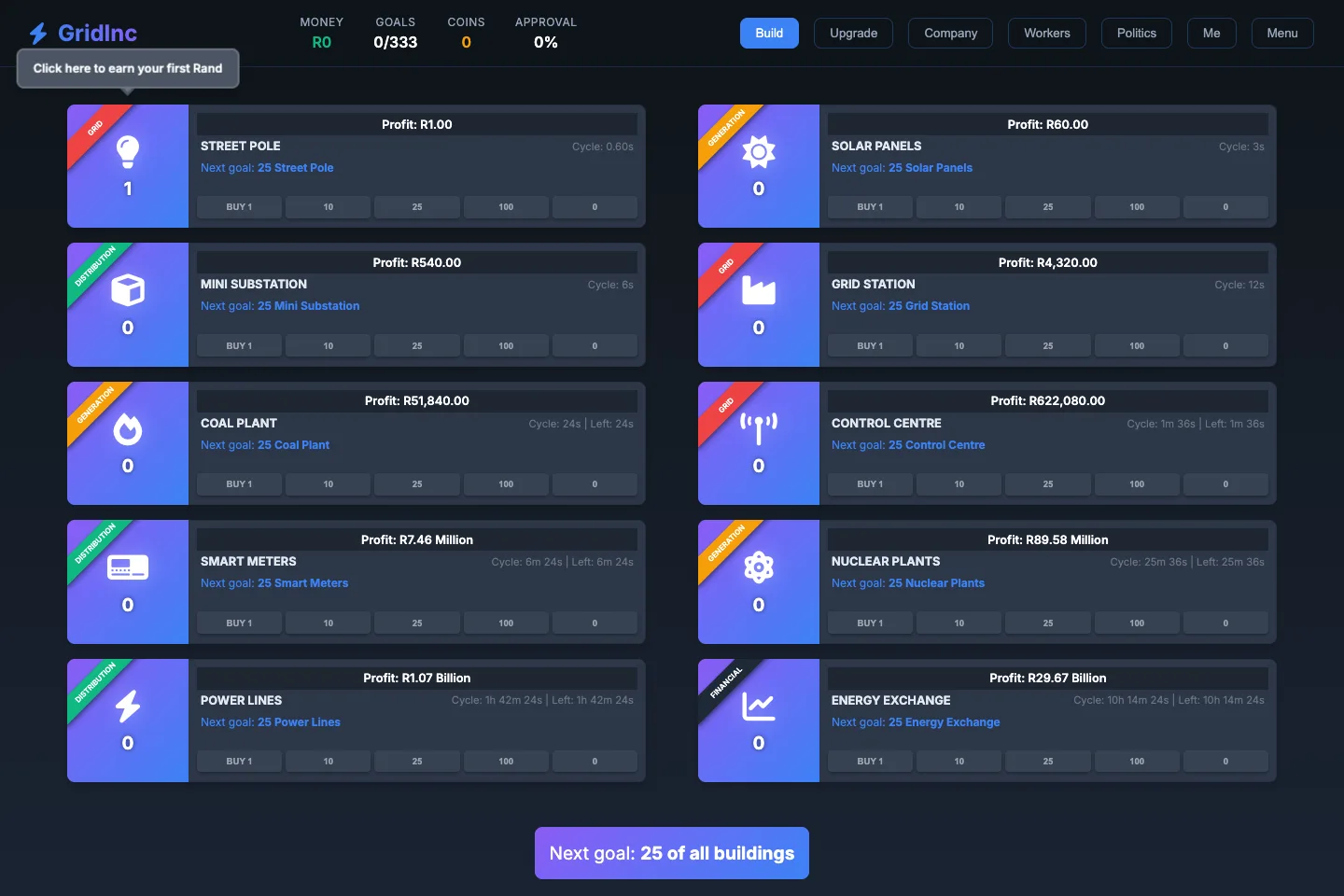
Loadshedding gave the game a local voice, but the design could not survive on the reference alone. The player needed a clear reason to return. Buildings create income, workers and politicians automate parts of the operation, upgrades change the pace, and goals keep pointing toward the next meaningful step.
Why an idle game suited the idea
An electricity network continues doing its job when nobody is staring at it. That made idle progression a natural fit. The game could acknowledge time away, then welcome the player back to an operation that had kept moving.
Idle games look easy from the outside because the numbers rise on their own. The craft sits in the timing between decisions. A purchase should arrive soon enough to stay tempting. A larger goal should feel distant, then gradually become believable. Automation should reward commitment without removing every reason to play.
Finding the tone
GridInc needed humour, but it also needed affection for the place it came from. The game could joke about ambitious infrastructure, public approval and political help without turning the whole experience into a lecture. The strongest lines were usually the shortest ones, tucked beside a system that was already fun to use.
That balance carried into the interface. The player sees a serious management game with a wink running through it. Big numbers and long-term strategy get room to breathe, while the writing reminds you that the whole empire started with a very South African problem.
A long game needs visible landmarks
The final progression contains 333 goals and hundreds of upgrades. Those numbers sound impressive, but volume alone does not create depth. Each layer needs to arrive when the player can understand why it exists. Goals became the spine that introduces systems, marks progress and gives the next session a destination.
The leaderboard added another kind of landmark. Finishing the game is already a long personal achievement. Comparing completion journeys gives committed players a reason to refine the route through another company without changing the relaxed pace for everyone else.
The lesson that stayed with Saratoga Games
GridInc proved that a specific point of view can carry a browser game much further than a generic theme. Players understood the electricity fantasy immediately because the systems, writing and setting all pulled in the same direction.
It also exposed the cost of building a large game without a durable production memory. Fixes, balance rules, save behaviour and release details accumulate quickly. The work that later became SaratogaKit grew from that need: keep the intent beside the code, protect what already works, and make every future build easier to reason about.
GridInc began with a local frustration and grew because the theme, progression and humour supported the same fantasy. Its biggest legacy is the production discipline it inspired for every Saratoga game that followed.