The table had to feel trustworthy
A puck can be fast, bright and satisfying while still feeling unfair. The player notices when a post behaves differently from a rail, when a shot passes through a mallet, or when the same movement produces a different result after a slow frame. Trust disappears before most players can describe why.
We built the match around a steady simulation and repeatable contacts. That gave the visuals freedom to become louder because the table underneath remained calm. Neon, sparks and celebrations could amplify a result that the player already believed.
Bank shots became the design test
The moment bank shots became reliable, the game started to open up. A direct shot asks the rival to cover one line. A bank creates anticipation, sends the eye to the rail, then brings the puck back from somewhere else. It turns a small table into a place with possibilities.
That made the corners and goal posts important design surfaces. Near-post shots needed to look and behave honestly. Soft blocks needed a different character from committed strikes. We spent time on those quiet contacts because they create the stories players remember as skill.
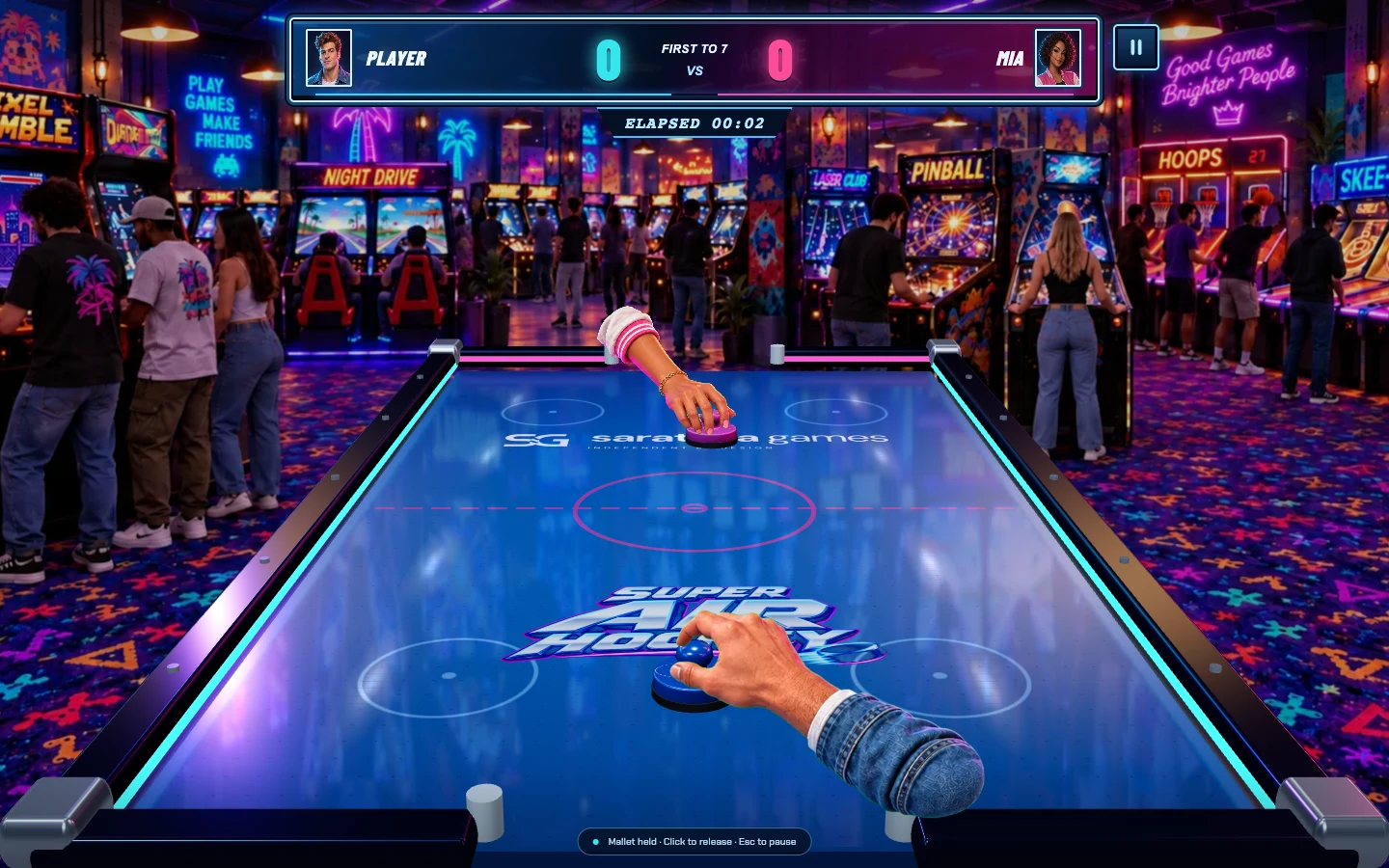
Controls should disappear during a rally
Mouse, trackpad, touch and keyboard all describe movement differently. The table has to turn those signals into one believable mallet. If the input method becomes the thing a player is thinking about during a rally, the implementation is getting in the way.
A lot of the work went into edge cases that should remain invisible. The pointer reaches the side of a screen. A finger covers the puck. A keyboard sends repeated movement. The design goal stayed simple: the mallet should feel connected to the player's intention and stay within the same rules on every device.
A stronger rival should look smarter
The first opponents could move and defend, but they did not always look like they understood the table. They chased moments instead of preparing for them. Better rivals began reading likely rebounds, returning to useful positions and approaching a loose puck from the side that creates an attack.
The five difficulty levels change how quickly and accurately a rival makes those decisions. The puck and rails keep the same rules. That distinction matters. Losing to better positioning creates curiosity and another attempt. Losing because the table quietly changed creates frustration.
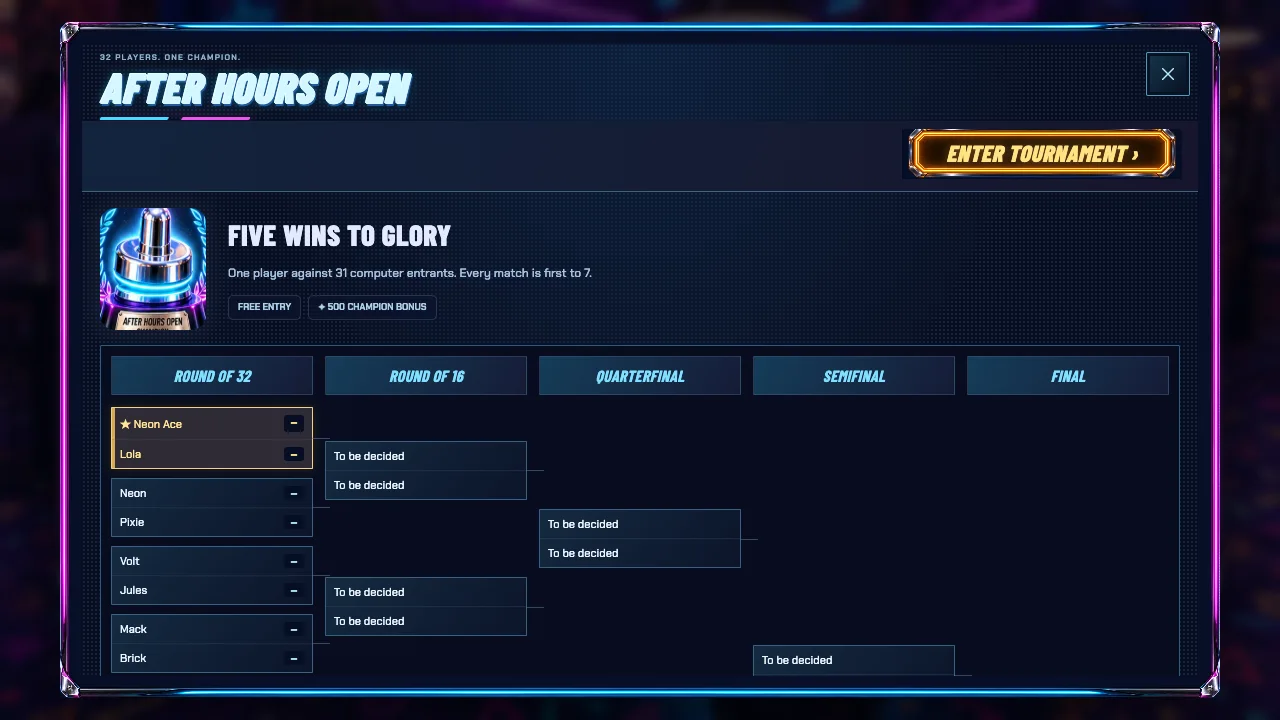
- Easy leaves visible time and space for the player to learn.
- Medium and Hard recover more cleanly and attack with purpose.
- Expert and Pro read the table early and waste very little movement.
One unfair serve changed the rule
An earlier serve could launch the puck automatically after a point. In rare cases it produced another goal before the receiving side had a meaningful opening touch. The system was working as written, but the moment felt wrong. That was enough reason to change it.
The puck now begins at rest for its owner. The pause gives both the player and the rival a readable first decision. This is a small example of a rule I carried through the project: a technically valid outcome can still fail the emotional contract of the game.
SaratogaKit kept the spectacle honest
The arcade grew to include named rivals, six venues, a tournament, League Nights, Arcade Night and a large set of cosmetic rewards. SaratogaKit helped keep those layers attached to the core promise. New presentation work had to preserve the same match flow, control paths and race to seven.
AI agents were useful for exploring edge cases, replaying situations and checking how a change travelled through modes and screen sizes. Human judgement stayed at the centre. A test can prove that the puck touched a post. It cannot decide whether the rebound made the player grin, understand their mistake or want one more match. That final call still comes from playing.
The strongest parts of Super Air Hockey came from restraint: dependable table rules, rivals that win through better decisions, and spectacle that celebrates the point without taking it over.